
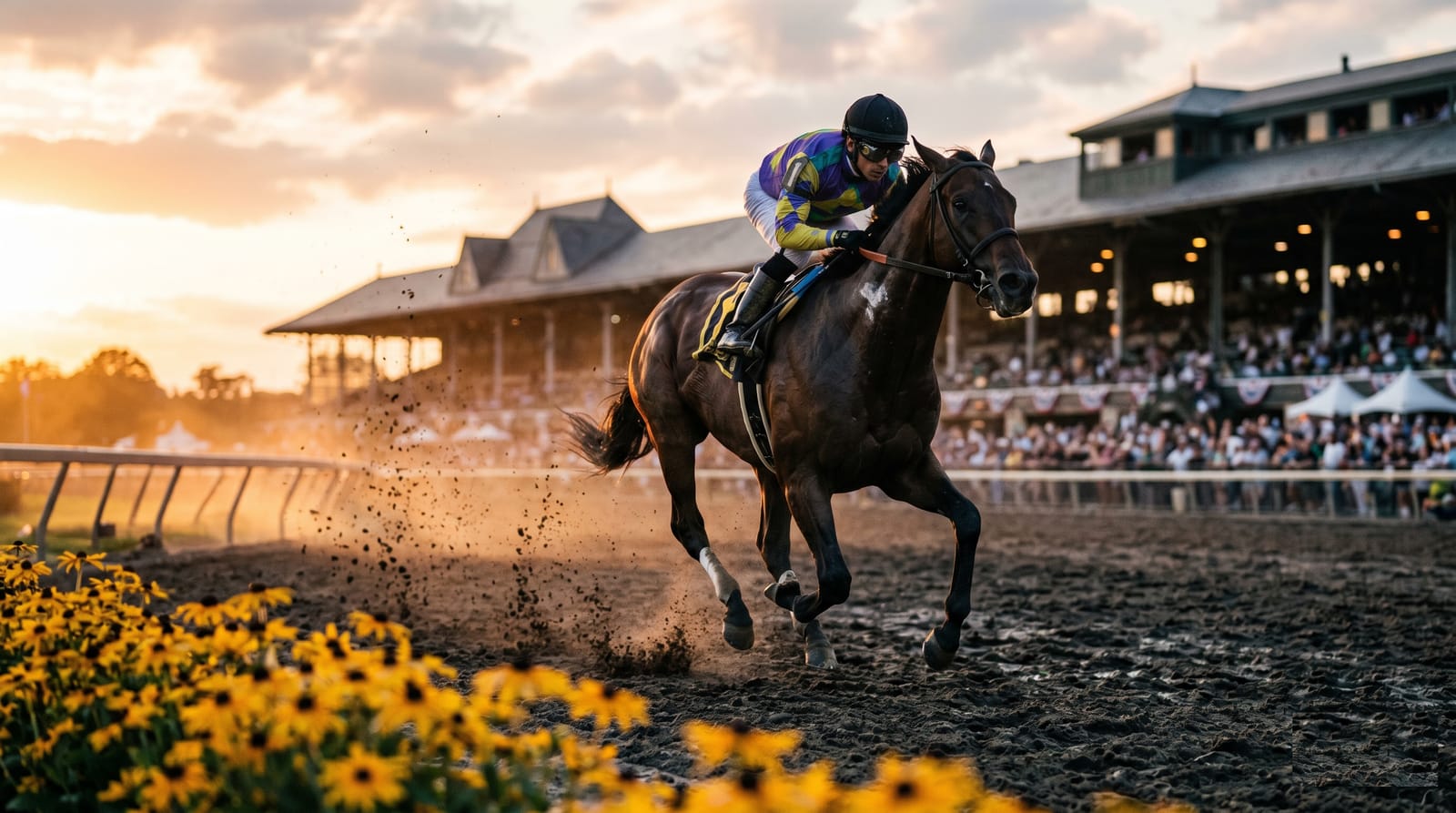
Preakness Stakes Picks & Handicapping
The Preakness Stakes is the second leg of the Triple Crown, run two weeks after the Kentucky Derby. It's a Grade 1 race for three-year-olds at 1 3/16 miles on dirt - one-sixteenth of a mile shorter than the Derby - with a maximum field of 14 and a $2 million purse. The 2026 running shifts to Laurel Park while Pimlico is being redeveloped. If you're looking for an edge on Preakness Day, this is how we approach it.
When Is the Preakness Stakes?
The Preakness is run two weeks after the Kentucky Derby - typically the third Saturday in May. Historically at Pimlico Race Course in Baltimore, but for the 2026 running and through the redevelopment window, the race shifts to Laurel Park. Grade 1, $2 million purse, max field of 14, 1 3/16 miles on dirt.
The Preakness is often the most under-bet of the three Triple Crown legs - the Derby gets the casual money, the Belmont gets the Triple Crown attempts (when there is one), and the Preakness sits in the middle, frequently with smaller fields and softer markets. Disciplined handicapping pays here.
The Road to the Preakness
Unlike the Derby and Oaks, the Preakness has no points trail. The field is built from three sources:
- Derby horses making the trip - typically the Derby winner (when connections opt in), plus a handful of other Derby finishers whose connections like the spot
- "New shooters" - fresh 3-year-olds skipping the Derby and pointing directly at Preakness, often using late-spring stakes like the Federico Tesio, Lexington, or Withers as their final prep
- Local stakes winners - particularly with the move to Laurel, horses with form over the host track surface get a bigger lean than usual
Smaller field than the Derby (typically 8-10 vs. 20). Less traffic trouble, more genuine handicapping setups.
How We Handicap the Preakness Stakes
Same methodology we use on every stakes race. What the E-Z Win® Form weighs on Preakness day:
- Speed ratings calibrated to the host track's dirt surface
- Tiering into T1 through T5 so subscribers see at a glance who's live
- Pace projection in a smaller field - Preakness fields rarely run with the chaos of a Derby pace, which changes how speed sets up
- Class relief for horses stepping up vs. coming down off Derby form
- Trip notes from prep races and (for Derby returners) the Derby itself
Why the Preakness Is a Bettor's Race
A few reasons the Preakness often plays cleaner than the Derby:
- Smaller field. 8-10 horses instead of 20. Traffic is real but not chaotic. Competent horses with clean trips can actually get them.
- Shorter distance. 1 3/16 miles instead of 1 1/4. Closer to the distance these horses have run at previously.
- Softer public betting. Recreational money concentrates on the Derby. Preakness pools lean toward serious bettors, which means form matters more than the narrative.
- Triple Crown skips create value. When the Derby winner doesn't run in the Preakness - increasingly common - the race opens up in a way the morning line doesn't always reflect.
Get Our Preakness E-Z Win® Form
The E-Z Win® Form for the Preakness gives you:
- Our full tier rankings for all Preakness runners
- Speed figures calibrated to the host track's dirt surface
- Detailed past performances and workouts for each horse
- In-depth horse, jockey and trainer stats
- The same format subscribers use on every stakes race all year
See a sample E-Z Win® Form · See pricing
Frequently Asked Questions
When is the next Preakness Stakes?
The Preakness is run two weeks after the Kentucky Derby, typically the third Saturday in May. The 2026 running is Saturday, May 16 at Laurel Park.
Why is the 2026 Preakness at Laurel Park instead of Pimlico?
Pimlico Race Course is undergoing a multi-year redevelopment. The Maryland Jockey Club moved the 151st Preakness to Laurel Park for 2026 and likely subsequent years until Pimlico reopens. The race conditions, distance, and Triple Crown status are unchanged.
How is the Preakness different from the Kentucky Derby?
The Preakness is 1 3/16 miles (vs. 1 1/4 in the Derby), fielded at a maximum of 14 horses (vs. 20), and runs two weeks after the Derby on dirt. It's the second leg of the Triple Crown.
Why do Derby winners sometimes skip the Preakness?
The two-week turnaround is shorter than the typical Derby-to-next-race gap most three-year-olds get. Increasingly, connections decline the Triple Crown attempt in favor of giving the horse a freshening into the Belmont (five weeks out) or skipping straight to the summer Grade 1 schedule.
Is there a wager that links Friday's Black-Eyed Susan with the Preakness?
Yes - two of them. The Black-Eyed Susan/Preakness Double is the direct analog to the Oaks/Derby Double: pick the winner of Friday's Black-Eyed Susan Stakes and Saturday's Preakness, $1 minimum. Beyond that, Maryland Jockey Club also cards two-day Pick 5 wagers that span both cards - the Black-Eyed Susan / Preakness All Stakes Two-Day Pick 5 (mixed surfaces) and the Preakness All Dirt Pick 5 (dirt only). Both Pick 5s have higher payout potential than the double but require five correct legs across two days.